





Why Improving Author Conditions Starts with Visibility

Most authors wait months to learn how their books are performing long after they could act on that information. Our CCO Angel on why real-time sales visibility is the foundation for better author conditions, and how data transparency changes the professional practice of writing

Angel Marita Kirkegaard

2/5/20262 min read

For most authors, understanding how their work performs in the market remains an exercise in hindsight.

By the time sales figures arrive, the moment has usually passed, along with the opportunity to understand what drove them. Patterns emerge too late to inform decisions, and context is lost somewhere between the data and the person who might have used it.

It serves acquisition meetings and marketing budgets and quarterly planning sessions. What reaches the author is its residue: a statement, semi-annually if they're fortunate, annually if they're like most. By the time it arrives, it describes a world that no longer exists.

The imbalance announces itself quietly. Authors are asked to make long-term choices: what to write next, when to publish, how much financial risk to carry on the basis of information delivered too late to be useful. It's a strange arrangement, isnt it?

This expectation of strategic thinking in the absence of strategy's raw material (data data data!).

You wouldn't ask someone to navigate by a map drawn six months after the journey, yet this is more or less the norm in publishing.

This isn't about turning writers into data analysts. It's about returning information to the people whose labor generated it in the first place. When you can see how your work is actually performing, not as distant history but as present tense, you stop guessing. You start knowing. And knowing changes what's possible

In my work with building Edda I've come to believe that visibility is the simplest and most profound change available to this industry. Not visibility as exposure, most authors get that, but visibility as sight. The ability to see your own work as it moves through the world while it's still moving. To recognise the difference between a surge and a blip.

To understand how one book builds toward the next, or doesn't.

This isn't about turning writers into data analysts. It's about returning information to the people whose labor generated it in the first place. When you can see how your work is actually performing, not as distant history but as present tense, you stop guessing. You start knowing. And knowing changes what's possible.

That is my main purpose with Edda anyway. To close (maybe close is too ambitions, but at least bridge) the gap between the event and the understanding of it. To make the professional life of writing a little less like patience, a little more like judgment. Because improving conditions for authors doesn't start with contracts or committees or well-meaning promises about transparency.

It starts with something simpler: letting people see.

Our mission

Edda's mission is to redefine the financial dynamics between authors and publishers, ensuring immediate, fair compensation for creators and creating a publishing landscape that is more efficient, equitable, and accessible for all parties involved.

Our vision

Our vision is to democratise the financial landscape of creator royalty, fostering a more sustainable and equitable ecosystem for creators worldwide
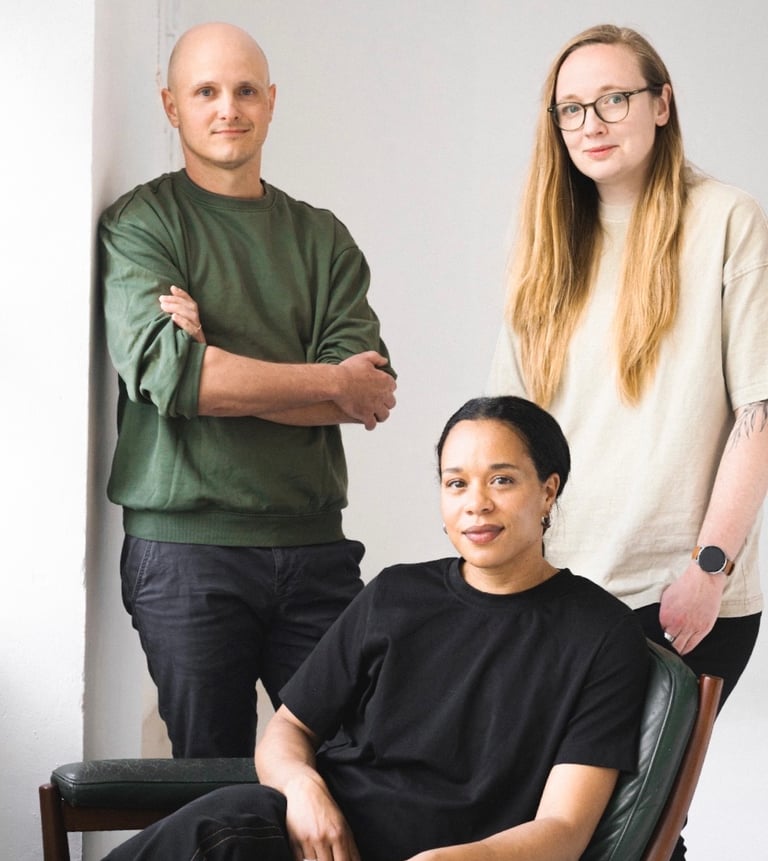
Edda was founded on firsthand experience with the challenges of delayed royalty payments, backed by a combined 25+ years of industry expertise and innovation.

We are Edda